
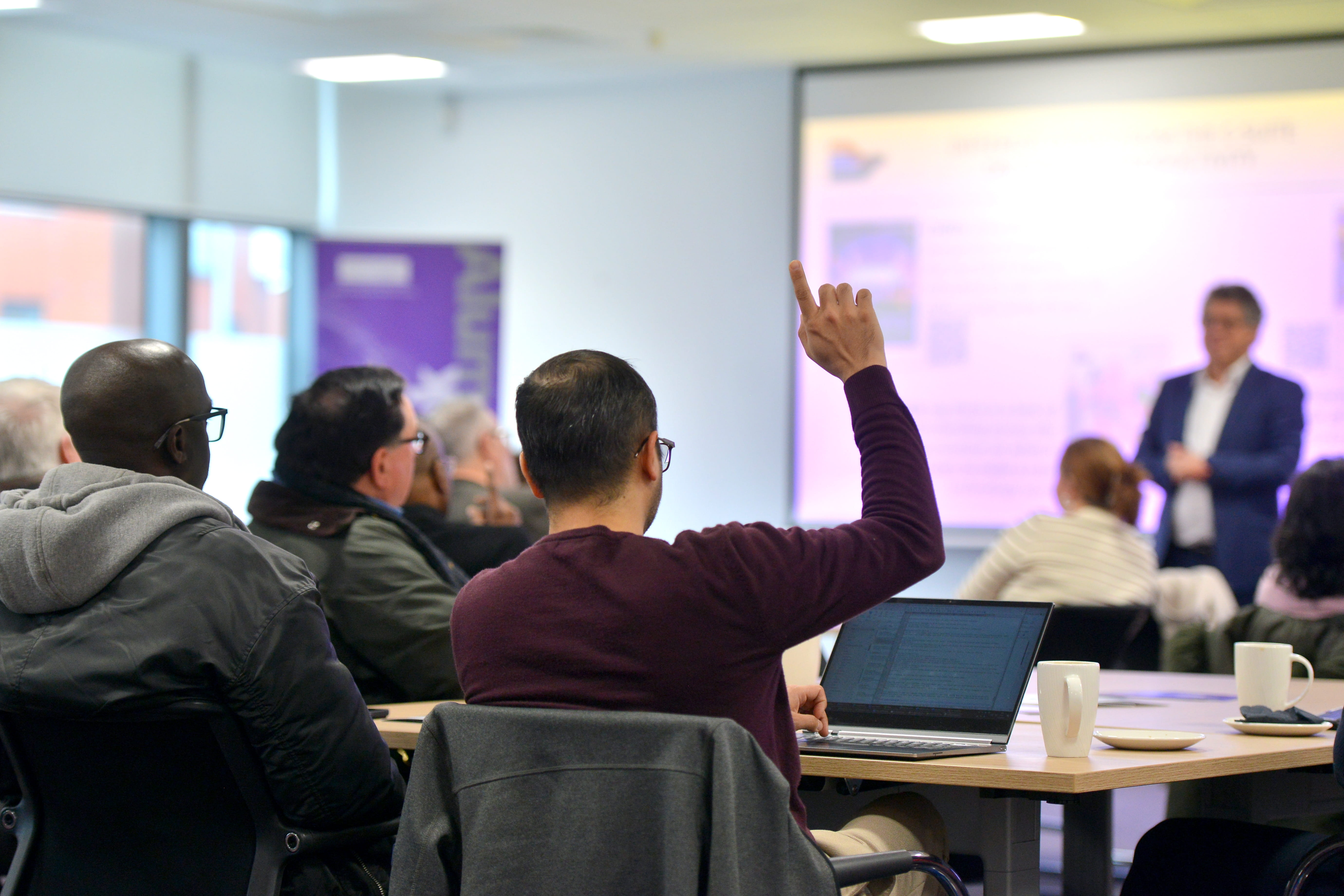
You want to advance your career. You want a degree that opens doors. But you also have a full-time job, a team depending on you, a family to get home to, and barely enough hours in the day as it is. Sound familiar?
Studying while working is one of the most rewarding and challenging things you can do for your career. Thousands of working professionals across the UAE do it every year. And the ones who succeed aren't necessarily the smartest or the most naturally disciplined. They're the ones who go in with the right strategies and a realistic plan.
This guide is for you — the working professional who refuses to put their ambitions on hold.
Yes. Genuinely, yes, but let's be honest about what it takes.
Working full-time while pursuing a degree or online course is not easy. It demands focus, self-discipline, and a willingness to use your time differently than you do now. You will need to sacrifice some leisure time.
You'll have evenings and weekends where studying replaces socialising. But here's what you also gain: momentum, confidence, and a qualification that changes the trajectory of your career.
The key is going in with open eyes. Many students at The University of Manchester – Dubai balance demanding jobs in finance, education, consulting, and healthcare with postgraduate study. They don't have more hours in the day than you do. They've simply learned to use those hours better.
Before you open a single textbook or sit down for your first lecture, be clear on why you're doing this.
What does success look like for you? A promotion, a career pivot, or deeper knowledge in your field? Your study goals are your anchor. In the weeks when work is relentless and your motivation dips, they're what pull you back.
Write them down. Be specific. "I want to complete my degree to move into a senior leadership role within three years" is far more powerful than "I want to learn more." When you're clear on your destination, every hour of study feels purposeful rather than burdensome.
This is where most working students either succeed or struggle. Time management is not about squeezing more into your day, rather it's about being intentional about where your energy goes.
Start by mapping out your week honestly. When are your working hours? When do you have family commitments? Is there genuine space, even 45 minutes, for focused study?
A solid study schedule might look like this:
The specifics matter less than the consistency. When study time is locked into your week like a work meeting, it happens. When it's left to chance, it doesn't.
There are excellent time management tools available to working students. Apps like Notion, Todoist, or even a simple Google Calendar can transform how you plan your study week. The technique of time blocking and assigning specific tasks to specific time slots is particularly effective for those juggling work commitments and academic deadlines.
Deep work sessions, where your phone is silent, and your focus is entirely on one task, are worth far more than scattered hours of half-distracted study. Aim for at least one or two of these per week.
One of the biggest advantages for working professionals today is the opportunity to study flexibly. Flexible courses like the programmes at The University of Manchester – Dubai are designed precisely for professionals who cannot step away from their careers to study full-time.
Studying flexibly means you're not tied to a physical campus at fixed times. You can attend classes around your working hours, revisit recorded lectures during your commute, and complete assignments in your own time.
But flexibility requires self-discipline. Without a professor watching the clock, you are responsible for your own progress. The most successful students treat their course like a second job, which is structured, committed, and non-negotiable.
Here's the advice no one talks about enough: balance work and study sustainably, or you will burn out.
Working full-time while studying is a long game. You may be doing this for one, two, or even three years. The students who complete their degrees are the ones who found the right balance and stuck to it.
Self-care isn't a luxury when you're studying and working, but it's a performance strategy. Your brain needs rest, proper nutrition, and movement to function at the level your course demands.
A few non-negotiables:
Don't try to do this invisibly. Share your goals with the people closest to you before you begin. When the people who matter most in your life understand your commitments, they can offer support rather than compete for your free time.
Equally, speak to your team at work if possible. Many employers in the UAE actively support professional development. You may find more flexibility around your working hours during exam periods than you expect.
Here are the tips that working students consistently come back to:
There's no point pretending this isn't a challenge. Working full-time while completing a master’s degree will test your resilience, your organisation, and your commitment. There will be weeks when it feels like too much.
But consider the other side of that challenge: the professional credibility a postgraduate degree brings, the doors it opens, the promotion it makes possible, the career pivot it enables. The benefits are tangible, long-lasting, and career-defining.
At The University of Manchester – Dubai, the programmes, including the Global MBA, Global (Executive) MBA, MSc Financial Management and MA Educational Leadership in Practice, are built around the reality of professional life. The learning is designed to be immediately applicable to your work.
You don't have to choose between your career and your education. You can achieve both with the right plan, the right support, and the right school behind you.
Ready to take the first step? Download the brochure to explore our programmes in detail, or request a callback and one of our advisors will get in touch at a time that suits you.
1. How much time do I need to dedicate to studying each week?
This depends on your course and level of study, but most postgraduate students at The University of Manchester – Dubai dedicate between 10 and 15 hours per week to their programmes. That includes reviewing lectures, completing reading, participating in discussions, and working on assignments. Spreading this across evenings and weekends makes it entirely manageable alongside a full-time job.
2. Will studying flexibly feel as rigorous as studying on campus?
Absolutely. Studying flexibly with The University of Manchester – Dubai means you receive the same academic knowledge and faculty expertise as on-campus students. The difference is flexibility. You attend classes and access materials on a schedule that works around your working hours, not the other way around.
3. What if my work schedule suddenly gets busier during a busy period?
It happens, and it's something every working student faces. The key is to plan ahead. If you know a busy period is coming, like the end of the financial year, a major project deadline, front-load your study in the weeks before. Speak to your academic support team; The University of Manchester – Dubai provides support to help students navigate exactly these situations.
4. How do I stay motivated when studying in my own time feels exhausting?
Return to your study goals. Remind yourself why you started. Connect with fellow students. Hearing from peers who are navigating the same challenges is genuinely motivating. And give yourself credit: working full-time while studying is difficult, and every week you stick to your schedule is a win worth acknowledging.
5. Is it better to study in the morning or evening?
There's no universal answer, and it depends entirely on your energy levels and working hours. Some students are sharper in the morning before the working day begins; others prefer evening study when the day is done. Experiment in your first few weeks to find what works, then protect that time consistently.
6. Can I realistically complete a degree while managing family responsibilities?
Yes, and many students at The University of Manchester – Dubai do exactly this. The flexibility of the blended format is precisely what makes it possible. Involving your family in your goals, setting realistic expectations, and protecting dedicated study time within your weekly schedule are the building blocks of making it work.





.avif)