
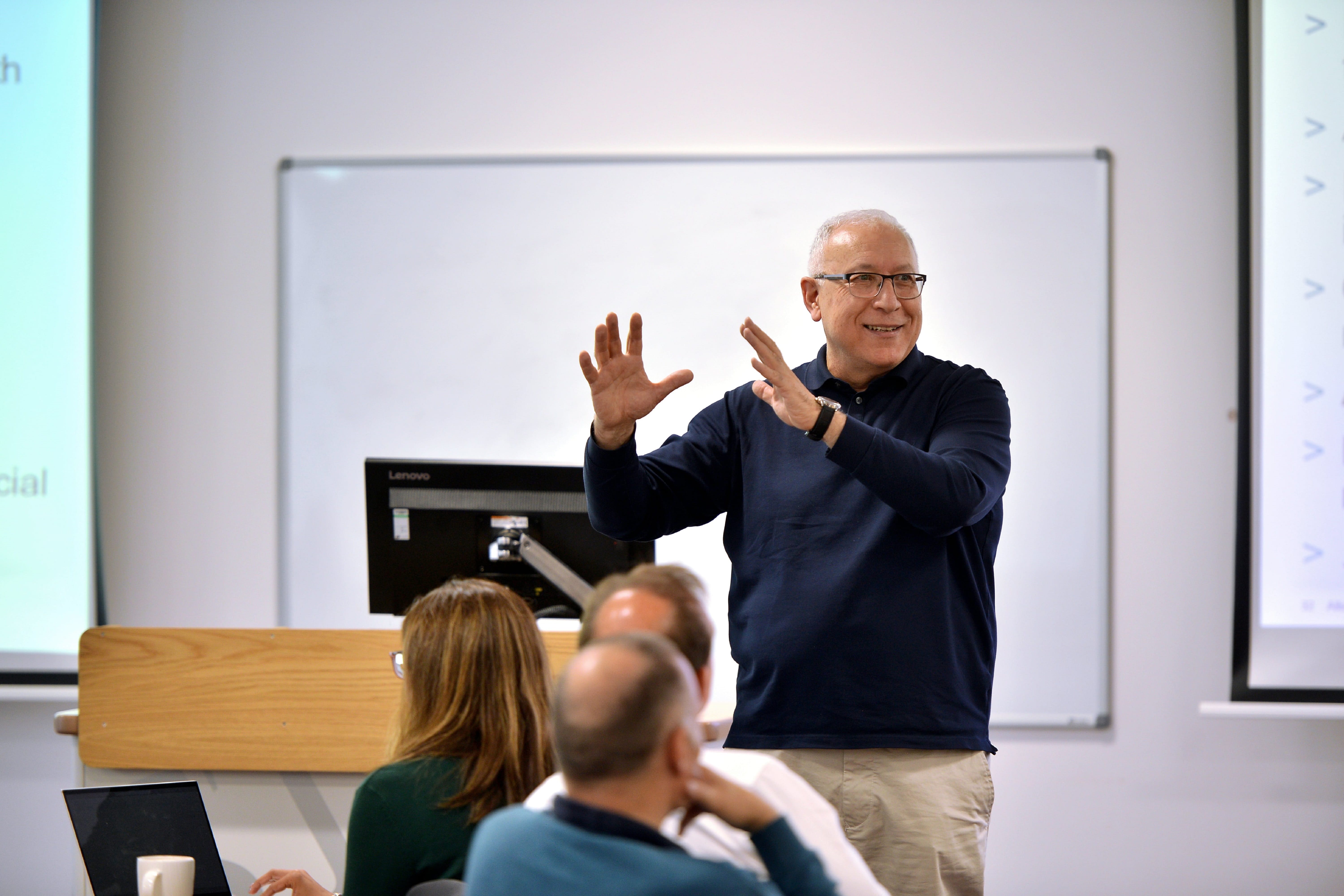
Why do some leaders inspire loyalty and trust, while others struggle to connect despite their experience?
The answer often lies in one defining quality: emotional intelligence.
In today’s world, especially within diverse workplaces like the UAE, emotional intelligence in leadership has become essential.
It’s what helps leaders motivate their teams, stay calm under pressure, and make fair, people-centred decisions.
This blog explores what emotional intelligence means in leadership, why it matters, and how it can shape a more effective, empathetic, and successful leadership style.
Emotional intelligence, a crucial skill for effective leadership, involves understanding and managing both your own emotions and those of others. It enables individuals to make balanced decisions and foster strong relationships.
Psychologist Daniel Goleman popularised the term emotional intelligence, showing that the best leaders succeed not because of technical expertise but because they connect on a human level.
Emotionally intelligent leaders combine empathy, awareness, and social skills to create workplaces built on trust and respect.
When leaders manage their emotions, stay composed, and read others' emotions, they make better choices, which improves the entire organisation’s performance.
Emotional intelligence is made up of five essential components that support leadership excellence:
1. Self-awareness
Being aware of your own emotions and how they affect decisions is a sign of strong self-awareness. Self-aware leaders understand their strengths, weaknesses, and emotional triggers, helping them respond rather than react.
2. Self-management
This is about regulating emotions and staying calm under pressure. A self-aware leader knows how to pause, think, and manage stress effectively, especially during conflict or crisis.
3. Motivation
Great leaders are driven by purpose, not just results. They maintain a positive outlook, set clear goals, and inspire others to perform at their best.
4. Empathy
Empathy is the ability to understand and share others' feelings. Empathetic leaders create psychological safety and make team members feel valued and understood.
5. Social skills
Strong communication and relationship management are crucial. Leaders with solid social awareness know how to build meaningful relationships, resolve conflict, and communicate with clarity.
Together, these emotional intelligence skills form the foundation of effective leadership and help organisations achieve long-term success.
Technical skills may help someone get promoted, but emotional intelligence determines how well they lead.
In fact, studies, including those featured in the Harvard Business Review, show that leadership effectiveness relies more on emotional competence than on technical expertise.
While technical knowledge drives business strategy, emotional intelligence drives people. It improves collaboration, decision-making, and job satisfaction.
Leaders who balance both technical skills and emotional intelligence build stronger, more resilient teams.
A workplace led by emotionally intelligent leaders feels different. There’s mutual respect, open communication, and a shared sense of purpose.
Empathetic leaders know how to listen actively, offer constructive feedback, and recognise people’s efforts.
This not only improves employee engagement but also reduces emotional exhaustion and turnover.
By practising transparent communication and fostering psychological safety, emotionally intelligent leaders build cultures where everyone feels encouraged to contribute, and that leads to improved performance across the organisation.
The good news is that emotional intelligence can be developed over time with practice and reflection.
Here are a few simple, practical steps leaders can take:
By applying these strategies consistently, leaders can develop emotional intelligence skills that inspire teams and drive organisational performance.
When leaders lack emotional intelligence, the effects can ripple through the organisation. Low emotional intelligence can cause poor communication, unresolved conflicts, and low morale among staff.
Leaders who are unable to manage their own emotions may react impulsively or create tension, leading to disengaged employees and reduced productivity.
Over time, this damages trust and the overall workplace culture.
Leadership built on emotional intelligence leads to lasting results. Emotionally intelligent leaders improve employee engagement, encourage innovation, and strengthen organisational commitment.
Their ability to connect with people ensures long-term loyalty and resilience qualities that are essential in today’s competitive environment. In many ways, emotional intelligence is not just a leadership skill; it’s a foundation for sustainable success.
As workplaces evolve, emotional intelligence is becoming increasingly important. The next generation of leaders will need to balance data, technology, and human connection to achieve meaningful progress.
Those who lead with empathy, clarity, and emotional awareness will be better equipped to navigate change, resolve conflict, and maintain motivation across teams.
Emotional intelligence in leadership is no longer optional; it’s what will separate good leaders from great ones.
Leadership today is about much more than driving results. It’s about building trust, empowering people, and creating spaces where everyone can thrive.
Leaders who invest in their emotional intelligence not only improve their own performance but also shape stronger, more connected organisations.
Take the next step with the MA Educational Leadership in Practice at The University of Manchester- Dubai. Learn how to lead with confidence, inspire change, and make a real difference in education.
[Download the brochure] or [Contact us today] to start your leadership journey.
1. What is emotional intelligence in leadership?
It’s the ability to recognise, understand, and manage both your own emotions and those of others. Emotionally intelligent leaders build trust, manage stress, and communicate effectively.
2. Is the MA Educational Leadership in Practice suitable for full-time working professionals?
Yes. The programme is delivered part-time through a flexible online and blended format, allowing you to continue working while studying. Most learners comfortably balance around 20 hours of study per week.
3. How long does it take to complete the MA Educational Leadership in Practice at Manchester?
The programme takes 24 months to complete. It is structured to support steady progress for professionals in leadership or teaching roles.
4. Do I need to be based in Dubai to join the programme?
No. The online and blended delivery model allows you to study from anywhere in the world, even if you are not based in the UAE.
5. What is the study format for this programme?
You will learn through a mix of online teaching, interactive activities, and collaborative group work. The blended format allows you to study from anywhere while engaging meaningfully with peers and faculty.
6. How can leaders practise empathy in daily work?
By listening carefully, acknowledging others’ perspectives, and responding with understanding rather than judgement.
7. Does emotional intelligence impact organisational performance?
Yes, leaders with high emotional intelligence boost teamwork, problem-solving, and overall productivity, all of which drive organisational success.






.avif)