
.svg)


April 19, 2026
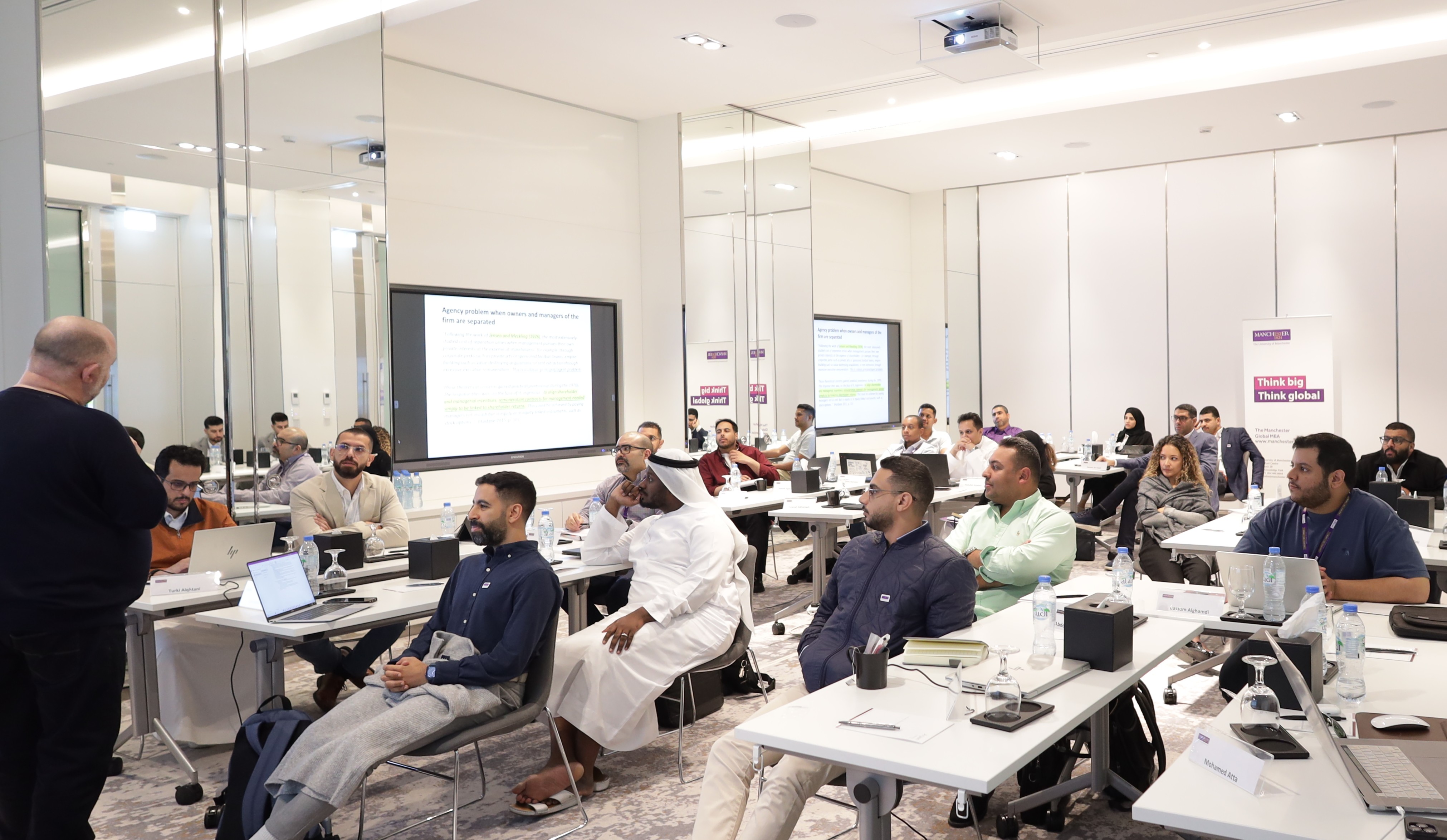
The ecosystem of higher education in the UAE is designed to react swiftly without compromising academic quality, says Randa Bessiso, founding director and CEO, Middle East, The University of Manchester – Dubai
In an era defined by rapid change, the ability of systems to maintain operational continuity through challenging periods is increasingly recognised as a key pillar of economic resilience and societal stability. Whether in education, healthcare, finance, or logistics, the capacity to absorb shocks across sectors and sustain core operations enhances institutional credibility, reinforces investor and market confidence, and ensures the UAE’s diversified economy continues to function under pressure.
With sectors like higher education, operational resilience is a must to maintain learning continuity. Universities operate on fixed academic timelines, guiding cohorts of students through programmes that directly influence career pathways and support national human capital development. Interruptions to this system can disrupt the progression of knowledge, delay assessments, extend graduation time, and undermine students’ engagement and confidence in their learning journey. Therefore, the education sector must be fully equipped to respond to disruptions at any time.
The ecosystem of higher education in the UAE is designed to react swiftly without compromising academic quality. Universities across the UAE reflect the strength and preparedness of this system in practice. Following recent directives from the Ministry of Higher Education and Scientific Research (MoHESR) to shift to remote learning, institutions moved quickly to adapt, transitioning delivery without disruption to academic schedules. This response was enabled by established systems, digital capabilities, and governance frameworks that support operational continuity.
Over the past decade, global disruptions and regional volatility have reinforced the importance of moving early, coordinating fast, and keeping essential services running without delay. In the UAE, continuous investments in infrastructure, policy development, and institutional capacity play a key role in reinforcing the country’s competitive capabilities to maintain stability in the face of emergencies.
When the COVID-19 pandemic unfolded in 2020, the education sector was put to the test, encouraging institutions to adopt and improve distance learning methodologies. According to Cavendish Maxwell’s Education Market Report, over 1.2 million school and university students across the UAE entered their virtual classrooms after the UAE government’s announcement in 2020 that e-learning would continue until the end of the academic year. This transition was executed seamlessly, with institutions rapidly adapting to deliver programmes online, ensuring academic continuity and keeping students’ progression on track.
The UAE has continued to invest in strengthening its digital education ecosystem through its National Strategy for Artificial Intelligence 2031, which aims to integrate AI into various sectors, including education, positioning the UAE as a leading hub for AI investment. The strategy aims to advance the integration of AI-powered learning platforms and tools, enhancing both the quality and accessibility of digital education across the UAE. It also establishes a clear mandate for institutions in both the public and private sectors to embed AI technologies within their curricula and digital infrastructure, ensuring alignment with national strategic priorities.
E-learning has become an integral component of modern education, with many institutions increasingly integrating online platforms in recent years. Supporting personalised and inclusive educational experiences, e-learning caters to different learning styles through multimedia content, interactive tools, and flexible formats that allow students to learn at their own pace and revisit complex concepts when needed. It also enhances engagement through real-time feedback, assessments, and collaborative features that encourage active participation. Based on a five-year historical analysis, the UAE E-Learning and Digital Training Market was valued at USD 1.2 billion in 2025, driven by the increasing adoption of digital technologies in education, the rise of remote learning solutions, and the growing demand for upskilling and reskilling in the workforce.
Additionally, blended and hybrid learning models have further strengthened the education system’s ability to adapt, ensuring that education can continue effectively across different formats and circumstances. Collectively, these approaches provide institutions with the flexibility to shift between in-person and digital delivery, allowing students to remain engaged in their studies even in the face of unexpected challenges.
During periods of uncertainty, students may struggle to maintain motivation and emotional balance, which can directly affect their ability to focus, learn, and perform academically. Universities must, therefore, place significant emphasis on safeguarding student well-being and ensuring a stable learning environment. Many institutions are increasingly prioritising mental health support through dedicated counselling services, well-being teams, and accessible support channels that allow students to seek help when needed. These services help cultivate a sense of community among students, supporting them to process stressful periods and pressures in a healthy way and remain mentally and emotionally equipped to succeed.
As the demands placed on education systems continue to evolve, the focus is increasingly shifting towards embedding continuity as a key principle rather than a reactive measure reserved for periods of disruption. This requires sustained coordination across institutions, supported by robust infrastructure, governance frameworks, and institutional readiness that together ensure the uninterrupted delivery of core academic functions.



.avif)